
Integrative Digestive Formula Review: Foundations of Digestive Health and Nutrient Absorption
Digestive health plays a central role in how the body processes food, absorbs nutrients, and supports overall physiological balance. Even when dietary intake appears adequate, inefficient digestion can limit how effectively nutrients are broken down and utilized by the body.
Modern dietary patterns, lifestyle factors, and individual variability all influence digestive efficiency. Large meals, high-protein diets, irregular eating schedules, stress, and aging can place additional demands on the digestive system. In these contexts, some individuals explore digestive support supplements as a way to support normal digestive function, rather than as a treatment or replacement for medical care.
Integrative Digestive Formula is positioned within this framework. It is designed to complement the body’s natural digestive processes, helping to support nutrient breakdown, absorption, and overall digestive comfort when used responsibly and as part of a broader wellness routine.

Importantly, digestive support supplements are not intended to “fix” digestive problems or address underlying gastrointestinal conditions. Their role is supportive, not corrective. Understanding this distinction is essential for setting realistic expectations and making informed decisions.
Understanding Digestive Health Beyond the Stomach
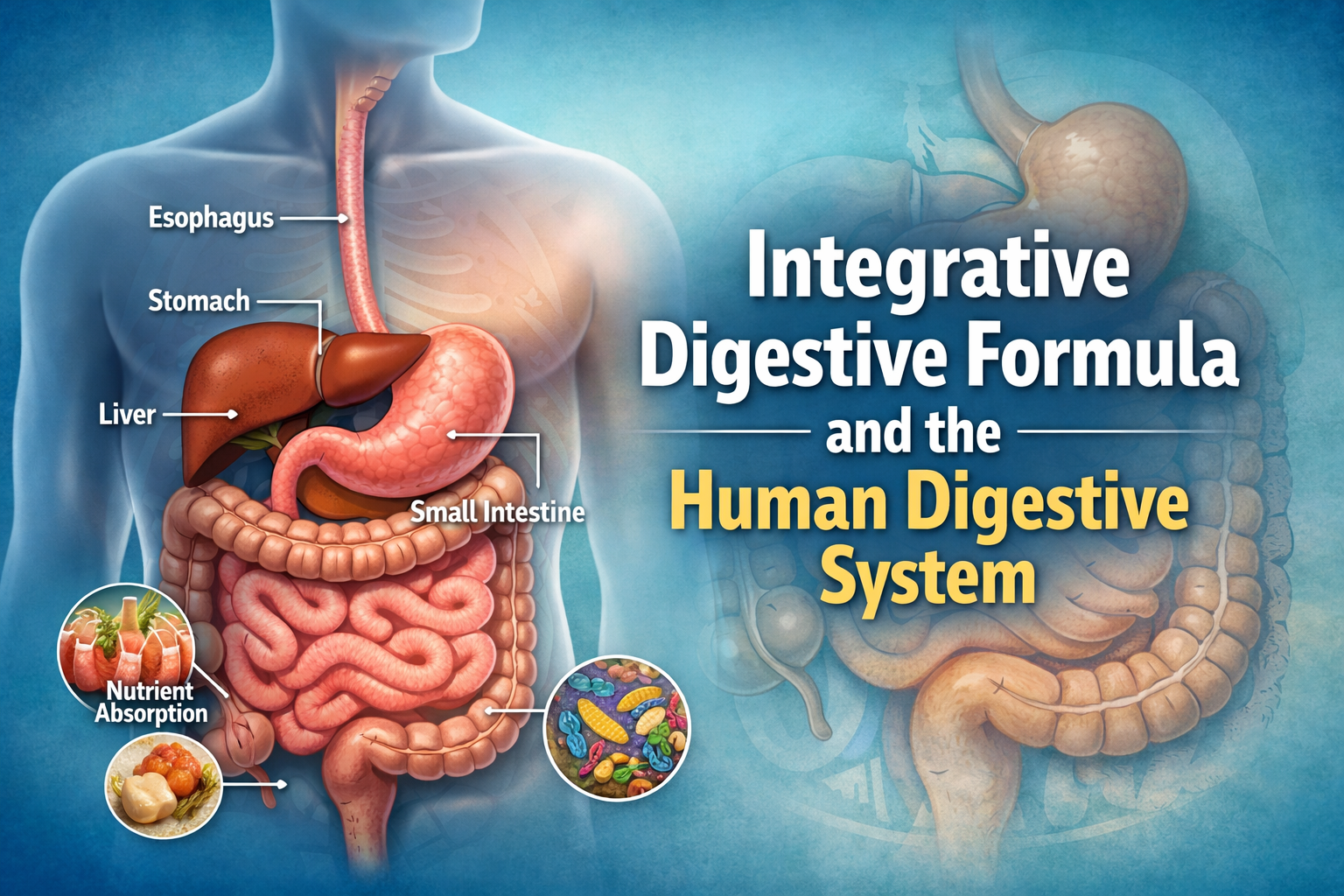
Digestion is often thought of as a process that occurs primarily in the stomach. In reality, digestion is a complex, multi-stage system involving several organs, enzymes, and physiological mechanisms that work together to convert food into absorbable nutrients.
The digestive process includes:
- Mechanical breakdown of food
- Chemical digestion via enzymes and acids
- Transport of nutrients across the intestinal lining
- Interaction with gut microbiota
- Elimination of waste products
Each stage plays a critical role. When any component functions inefficiently, overall digestive performance may be affected, even if calorie and nutrient intake appear sufficient on paper.
Digestive health therefore cannot be evaluated by symptoms alone. Some individuals may experience noticeable discomfort, while others may have subtle inefficiencies that influence nutrient absorption, energy levels, or dietary tolerance over time.
Nutrient Absorption: Where Digestion Truly Matters
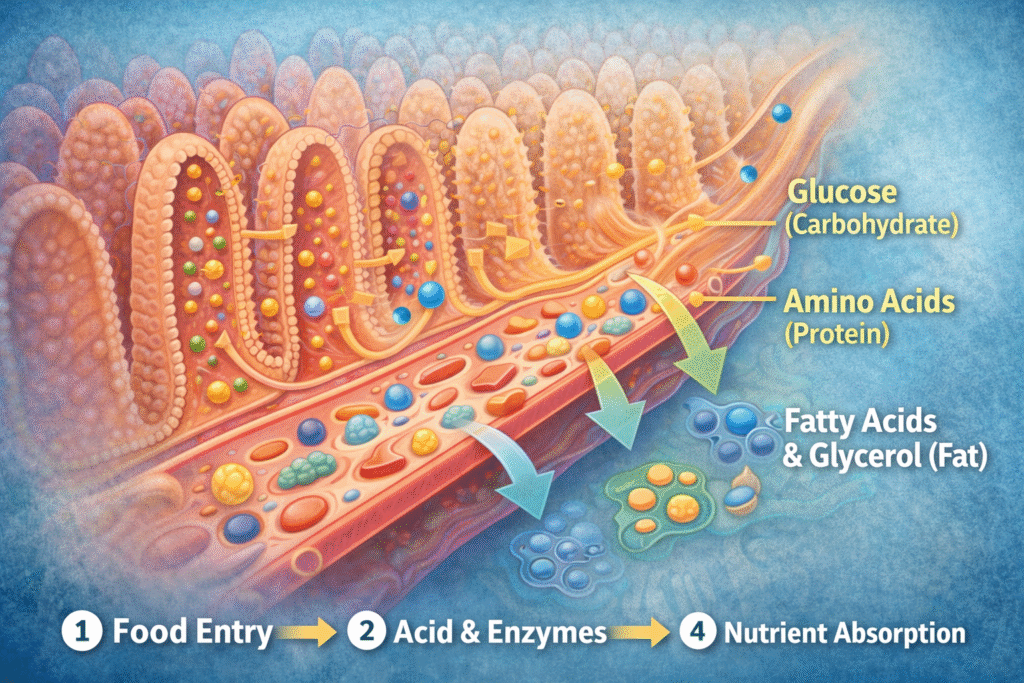
While digestion begins in the mouth and stomach, nutrient absorption occurs primarily in the small intestine. This is where carbohydrates, proteins, fats, vitamins, and minerals are transported into the bloodstream and delivered to tissues throughout the body.
Efficient absorption depends on several factors, including:
- Adequate enzyme activity
- Healthy intestinal lining
- Balanced gut microbiota
- Proper gut motility
If nutrients are not fully broken down into absorbable forms, they may pass through the digestive tract without being effectively utilized. This can occur even in individuals who consume nutrient-dense diets.
Digestive support supplements are designed with this stage in mind. By supporting enzymatic activity and digestive efficiency during meals, these formulas aim to help the body better utilize the nutrients already present in the diet.
The “Integrative” Approach to Digestive Support
The term integrative reflects a broader view of digestive health—one that considers digestion as part of an interconnected physiological system rather than an isolated function.
Digestive efficiency is influenced by:
- Dietary composition
- Meal timing and portion size
- Stress and nervous system regulation
- Physical activity
- Sleep quality
- Hydration status
An integrative digestive support formula is therefore positioned not as a standalone solution, but as one component of a comprehensive wellness strategy. This perspective aligns with current nutritional science, which emphasizes systems-based support rather than single-factor interventions.
Within this context, digestive support supplements may be most appropriate when combined with:
- Balanced dietary habits
- Mindful eating practices
- Consistent routines
- Attention to lifestyle factors that affect digestion
Why Some Individuals Consider Digestive Support Supplements
Digestive support supplements are commonly explored by adults who experience increased digestive demands rather than diagnosed digestive conditions.
Examples include individuals who:
- Consume larger or more complex meals
- Follow higher-protein or specialized diets
- Experience occasional digestive discomfort
- Are adjusting to dietary changes
- Seek to support nutrient absorption as part of healthy aging
In these situations, digestive support formulas may help support digestive comfort and efficiency when used appropriately. However, they are not substitutes for dietary improvements, medical evaluation, or professional guidance.
Setting Realistic Expectations From the Start
A responsible discussion of digestive support must emphasize limitations as clearly as potential benefits.
Digestive support supplements:
- Do not diagnose or treat digestive disorders
- Do not replace medical care
- Do not compensate for chronically poor dietary habits
- Do not guarantee symptom relief
What they may do is support normal digestive processes under certain circumstances, particularly when digestive demands are temporarily elevated.
This article explores Integrative Digestive Formula within that realistic, evidence-aligned framework—examining how digestive support supplements are designed to work, who may consider using them, and how they fit into a broader approach to digestive and nutritional health.
How the Digestive System Works: From Food Intake to Nutrient Absorption
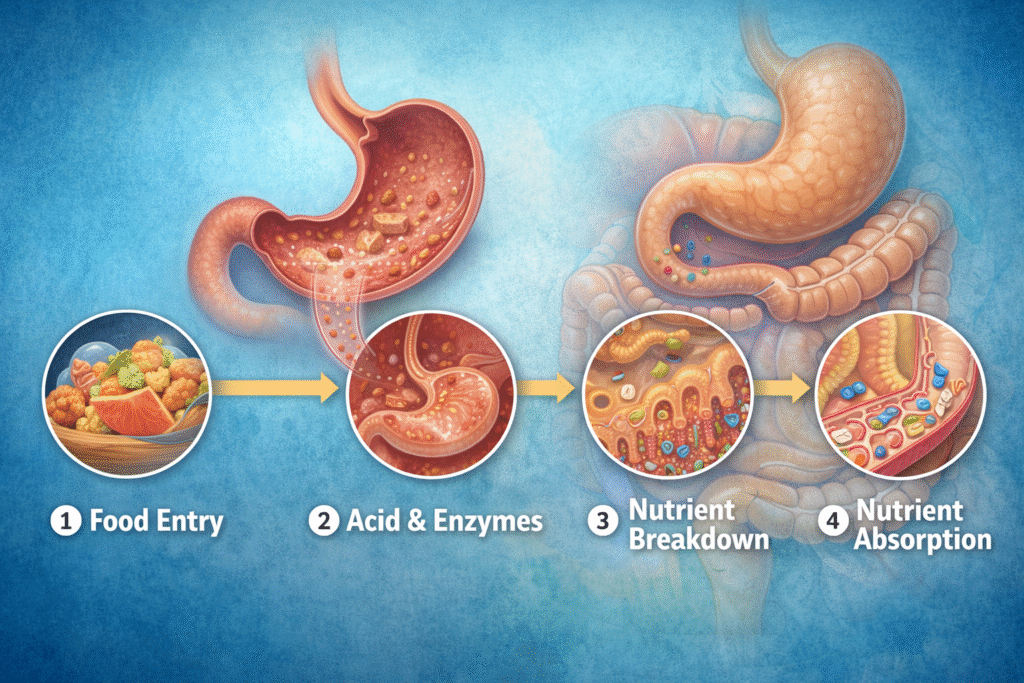
Understanding how digestive support supplements fit into a wellness routine requires a clear view of how digestion works under normal physiological conditions. Digestion is not a single action but a sequence of coordinated processes that begin before food enters the stomach and continue until nutrients are absorbed and waste is eliminated.
Each stage of digestion places different demands on the body, and inefficiencies at any point can influence overall digestive comfort and nutrient utilization.
The Role of the Mouth and Early Digestion
Digestion begins in the mouth, where mechanical chewing breaks food into smaller particles. This step is more important than many people realize. Proper chewing increases the surface area of food, making it easier for enzymes to act later in the digestive process.
Saliva contains enzymes such as amylase, which begin the breakdown of carbohydrates. Although this initial digestion is limited, it sets the stage for more efficient processing downstream.
Eating quickly, insufficient chewing, or distracted eating can reduce the effectiveness of this early stage, increasing the digestive workload later in the system.
Stomach Digestion: Acid, Enzymes, and Protein Breakdown
Once food reaches the stomach, it is exposed to gastric acid and digestive enzymes. This environment serves several important functions:
- Denaturing proteins to make them easier to digest
- Activating enzymes involved in protein breakdown
- Helping control microbial balance in ingested food
Proteins are partially broken down into smaller peptide chains in the stomach, primarily through the action of pepsin. Adequate stomach acid levels are essential for this process to occur efficiently.
Factors such as stress, aging, irregular eating patterns, and certain dietary habits may influence gastric function. When protein digestion in the stomach is incomplete, downstream digestive processes may be placed under additional strain.
Digestive support formulas do not replace stomach acid or gastric function. Instead, they are designed to support later stages of digestion, particularly when meals are larger or more complex.
The Small Intestine: Center of Digestion and Absorption
The small intestine is the primary site where digestion is completed and nutrients are absorbed into the bloodstream. This process relies on enzymes released from the pancreas and the intestinal lining itself.
Enzymatic Breakdown of Macronutrients
In the small intestine:
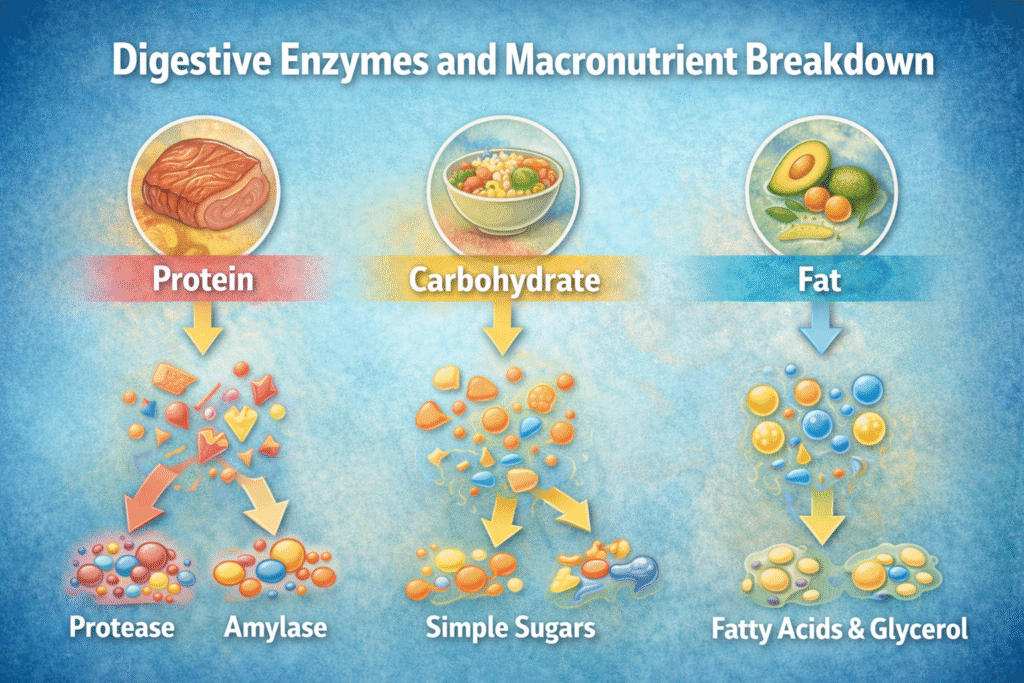
- Proteases break proteins into amino acids
- Amylases and other carbohydrases convert carbohydrates into simple sugars
- Lipases break fats into fatty acids and glycerol
These smaller molecules are then absorbed through the intestinal lining and transported to tissues where they are used for energy, structure, and metabolic processes.
Efficient enzyme activity is essential for this stage. When food is not adequately broken down, nutrients may pass through the digestive tract without being fully absorbed.
Nutrient Absorption and the Intestinal Lining
The inner surface of the small intestine contains millions of microscopic structures called villi and microvilli. These structures dramatically increase surface area, allowing for efficient nutrient absorption.
Healthy absorption depends on:
- Intact intestinal lining
- Proper enzyme activity
- Balanced gut motility
- Adequate blood flow to intestinal tissue
Digestive support supplements are often formulated with this stage in mind. By supporting enzymatic activity during meals, they aim to help nutrients reach absorbable forms more efficiently.
The Large Intestine and the Role of Gut Microbiota
After most nutrients are absorbed, remaining food material enters the large intestine. While fewer nutrients are absorbed here, this stage plays a critical role in digestive health.
The large intestine is home to a diverse community of microorganisms known as the gut microbiota. These microbes:
- Ferment certain fibers
- Produce short-chain fatty acids
- Support intestinal comfort and regularity
A balanced gut microbiome contributes to digestive resilience and overall gut function. Disruptions to microbial balance may influence digestive comfort and tolerance to certain foods.
Some digestive support formulas include probiotic or fermentation-derived components intended to support microbial balance, rather than alter it aggressively.
How Digestive Efficiency Can Be Challenged
Digestive efficiency can vary significantly between individuals and over time. Common factors that may increase digestive demands include:
- High-protein or high-fat meals
- Large portion sizes
- Rapid eating
- Dietary changes
- Increased stress levels
- Aging-related physiological changes
Under these conditions, the digestive system may require additional support to maintain comfort and nutrient utilization.
Digestive support supplements are designed for these contexts—not as everyday necessities for all individuals, but as situational tools within a broader nutrition strategy.
Where Digestive Support Formulas Fit In
Digestive support formulas are not designed to override normal digestion. Instead, they are formulated to complement the body’s natural processes, particularly during meals that place higher demands on digestive capacity.
Their role may include:
- Supporting enzymatic breakdown of macronutrients
- Assisting digestive efficiency during complex meals
- Supporting overall digestive comfort
Understanding where these formulas fit within the digestive process helps set appropriate expectations and reinforces responsible use.
How Integrative Digestive Formula Works Within the Digestive Process
Digestive support supplements such as Integrative Digestive Formula are designed to work in coordination with the digestive process, not independently from it. Their role is to support specific physiological steps involved in digestion and nutrient utilization, particularly during meals that place higher demands on the digestive system.
Understanding how these formulas function requires looking at their mechanisms of action rather than viewing them as generalized solutions.
Supporting Enzymatic Activity During Digestion
One of the primary roles of digestive support formulas is to support enzymatic digestion, especially in the small intestine where most nutrient breakdown occurs.
Digestive enzymes are responsible for converting complex macronutrients into smaller, absorbable components. While the body naturally produces these enzymes, demand may increase in certain situations, such as:
- Large or calorie-dense meals
- High-protein dietary patterns
- Meals containing mixed macronutrients
- Reduced digestive efficiency with age
Integrative Digestive Formula may include enzymes that complement endogenous production, helping to support efficient nutrient breakdown during meals without interfering with natural digestive signaling.
It is important to note that supplemental enzymes are not intended to replace the body’s own enzyme production. Their purpose is to assist digestion when demand temporarily exceeds baseline capacity.
Protein Digestion and Amino Acid Availability
Protein digestion is a multi-step process that begins in the stomach and continues in the small intestine. Incomplete protein breakdown can increase digestive workload and may contribute to post-meal discomfort in some individuals.
Digestive formulas that include proteolytic enzymes aim to:
- Support the breakdown of protein into amino acids
- Reduce the digestive burden associated with protein-heavy meals
- Support nutrient availability rather than simply caloric intake
This mechanism is particularly relevant for individuals consuming higher-protein diets or combining digestive support with amino acid supplementation as part of a broader nutritional strategy.
Carbohydrate and Fat Digestion Support
In addition to proteins, carbohydrates and fats require specific enzymes for proper digestion.
- Carbohydrase enzymes assist in breaking complex carbohydrates into simple sugars
- Lipase enzymes support the breakdown of dietary fats into absorbable components
When these processes are inefficient, undigested food components may move through the digestive tract, potentially influencing digestive comfort.
Digestive support formulas are designed to support balanced macronutrient digestion rather than favoring one macronutrient category over another.
Supporting Digestive Comfort Without Overstimulation
A key principle of integrative digestive formulas is support without overstimulation. These products are not stimulants, laxatives, or aggressive interventions.
Instead, they aim to:
- Support digestion during meals
- Reduce unnecessary digestive strain
- Promote comfort without forcing physiological responses
This distinction is critical for responsible use. Digestive support should feel subtle, not disruptive.
Gut Microbiota Support and Digestive Balance
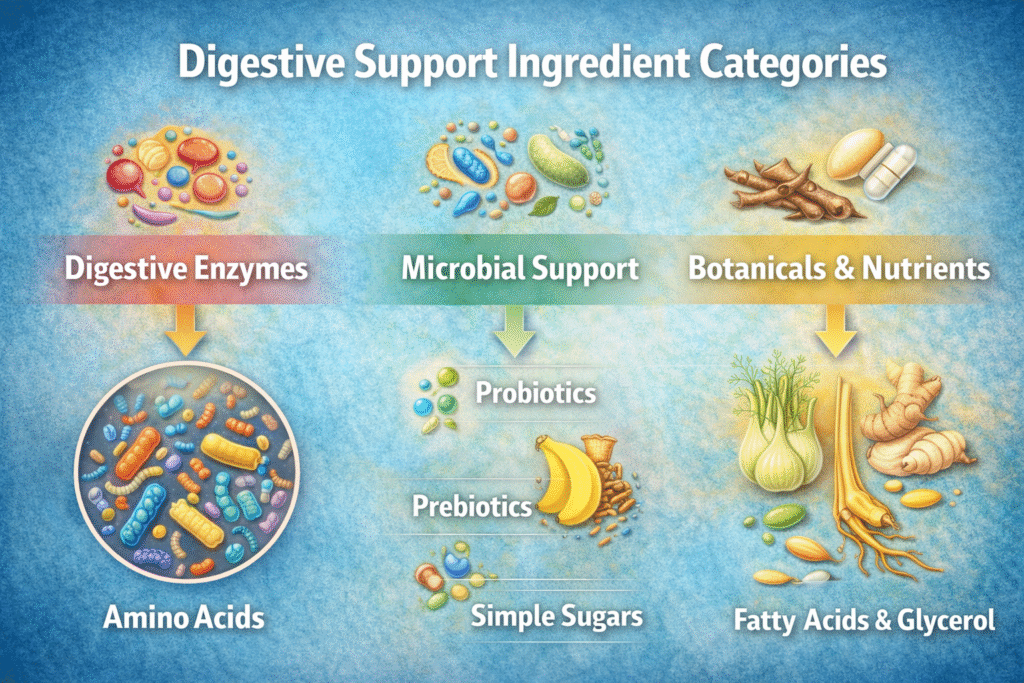
Some integrative digestive formulas include probiotic strains, fermentation-derived ingredients, or prebiotic compounds intended to support microbial balance in the gut.
A balanced gut microbiota contributes to:
- Fiber fermentation
- Short-chain fatty acid production
- Digestive regularity
- Overall gut resilience
Rather than attempting to “change” the microbiome aggressively, digestive support formulas are generally designed to support an environment conducive to balance.
Microbial support is particularly relevant when digestive challenges are associated with dietary changes, stress, or irregular eating patterns.
Functional Fibers and Botanical Compounds
Certain integrative digestive formulas may include functional fibers or botanical extracts traditionally associated with digestive comfort.
These ingredients are typically selected for their:
- Gentle support of gut motility
- Contribution to digestive tolerance
- Role in overall digestive comfort
Their inclusion reflects a holistic approach that recognizes digestion as influenced by mechanical, chemical, and functional factors.
Timing and Context: Why Digestive Support Is Meal-Dependent
Unlike many supplements that are taken independently of food, digestive support formulas are typically designed to be used in direct relation to meals.
This timing matters because:
- Enzymes are most effective when food is present
- Digestive support is context-specific
- Needs vary based on meal size and composition
This reinforces the idea that digestive support supplements are tools for specific situations rather than daily necessities for all individuals.
What Digestive Support Formulas Are Not Designed to Do
Equally important is understanding the limitations of integrative digestive formulas.
They are not designed to:
- Diagnose digestive disorders
- Treat gastrointestinal diseases
- Compensate for chronically poor dietary habits
- Replace medical evaluation
Their role is supportive and situational, fitting within a broader nutrition and lifestyle framework.
How This Fits Into an Integrative Wellness Strategy
Integrative Digestive Formula is best understood as one component of a holistic approach to digestive and nutritional health.
Its effectiveness depends on:
- Dietary quality
- Eating habits
- Stress management
- Physical activity
- Sleep and recovery
When these factors are addressed together, digestive support supplements may help support digestive efficiency and nutrient utilization in a responsible manner.
Ingredients Breakdown: What’s Inside Integrative Digestive Formula and Why
Understanding the ingredients in a digestive support formula requires more than reading a label. Each component is included to support a specific digestive function, and its relevance depends on how it fits within the overall digestive process.
Integrative Digestive Formula is typically structured around functional ingredient categories, rather than isolated compounds. This approach reflects the complexity of digestion itself, which relies on multiple overlapping mechanisms.
[logo-showcase id=”321″ title=”Advanced BioNutritionals”]
Digestive Enzymes: Supporting Macronutrient Breakdown
Digestive enzymes form the core of most digestive support formulas. Their role is to assist in the breakdown of macronutrients into forms the body can absorb efficiently.
Proteolytic Enzymes (Protein Digestion)
Proteases support the breakdown of dietary proteins into amino acids and smaller peptides. This process is essential for nutrient utilization, particularly in diets higher in protein.
Including proteolytic enzymes in a digestive formula may help support:
- Efficient protein digestion during meals
- Reduced digestive workload following protein-heavy intake
- Nutrient availability rather than undigested residue
Carbohydrase Enzymes (Carbohydrate Digestion)
Enzymes such as amylase and related carbohydrases assist in breaking complex carbohydrates into simple sugars. These enzymes support digestion of grains, vegetables, and mixed meals.
Lipase (Fat Digestion)
Lipase supports the breakdown of dietary fats into absorbable fatty acids and glycerol. Fat digestion is a complex process that can be influenced by meal size and composition.
Digestive formulas that include lipase aim to support balanced digestion across all macronutrients, rather than focusing on protein alone.
Probiotics and Fermentation-Derived Components
Some integrative digestive formulas include probiotic strains or fermentation-derived ingredients. These components are not included to directly alter gut microbiota but to support a balanced digestive environment.
A healthy microbial balance contributes to:
- Fiber fermentation
- Production of short-chain fatty acids
- Digestive regularity and comfort
When included responsibly, microbial-support ingredients are designed to complement digestion rather than override natural microbial dynamics.
Prebiotic Fibers and Functional Substrates
Prebiotic fibers serve as substrates that support existing beneficial gut bacteria. Unlike probiotics, which introduce microorganisms, prebiotics support the growth and activity of microbes already present in the gut.
In digestive formulas, prebiotic fibers are typically included in moderate amounts to:
- Support microbial balance
- Promote digestive regularity
- Contribute to overall gut comfort
Excessive fiber inclusion may increase digestive discomfort in sensitive individuals, which is why formulation balance is essential.
Botanical Extracts and Digestive Comfort Compounds
Some digestive support formulas include botanical extracts traditionally associated with digestive comfort. These ingredients are generally selected for their functional and tolerability-supporting properties, not for pharmacological effects.
Common botanical categories may include:
- Herbs traditionally associated with digestive comfort
- Plant compounds linked to tolerance of mixed meals
- Ingredients selected for gentle digestive support
Their inclusion reflects an integrative approach that recognizes digestion as influenced by both biochemical and functional factors.
Supporting Digestion Without Overloading the System
A key characteristic of responsible digestive formulations is restraint. More ingredients do not necessarily mean better digestion.
Effective digestive support formulas prioritize:
- Appropriate enzyme ratios
- Moderate inclusion of fibers and botanicals
- Synergy between components
This approach reduces the risk of overstimulation and aligns with the goal of supporting normal digestive function rather than forcing physiological responses.
Why Ingredient Quality and Formulation Matter
Beyond ingredient selection, formulation quality plays a significant role in how a digestive support supplement performs.
Important considerations include:
- Enzyme activity levels
- Stability and delivery format
- Compatibility between ingredients
- Timing relative to meals
Two formulas with similar ingredient lists may perform very differently depending on formulation design.
Ingredients as Part of a Larger Digestive Strategy
It is important to view ingredients within context. Digestive support supplements are not standalone solutions but tools that work best when integrated with dietary habits and lifestyle factors.
Ingredients alone cannot compensate for:
- Chronically poor eating habits
- Inadequate hydration
- Persistent stress
- Irregular meal timing
Understanding ingredient roles helps individuals make informed decisions and avoid unrealistic expectations.
Potential Benefits, Limitations, and Realistic Expectations
Digestive support supplements are often discussed in terms of benefits, but responsible evaluation requires equal attention to limitations and realistic expectations. Understanding what Integrative Digestive Formula may support—and what it is not designed to do—is essential for informed decision-making.
Potential Areas of Support
Integrative Digestive Formula is designed to support normal digestive function, particularly during situations that increase digestive demand. When used appropriately, some individuals may experience support in the following areas.
Digestive Comfort During and After Meals
Meals that are large, rich in protein or fat, or consumed quickly can increase digestive workload. Digestive support formulas may help support comfort by assisting the breakdown of food components during digestion.
This support is typically subtle and situational rather than dramatic or immediate.
Support for Nutrient Utilization
By supporting enzymatic activity, digestive formulas aim to help nutrients reach absorbable forms more efficiently. This may be relevant for individuals focused on:
- Protein utilization
- Micronutrient intake
- Overall dietary efficiency
It is important to note that digestive supplements do not increase nutrient content in food; they are designed to support how nutrients are processed.
Support During Dietary Transitions
Dietary changes—such as increasing protein intake or adjusting meal composition—can temporarily challenge digestion. Digestive support supplements may help support digestive adaptation during these transitions.
Variability in Individual Response
Digestive responses vary widely between individuals. Factors influencing outcomes include:
- Baseline digestive health
- Dietary patterns
- Meal composition
- Stress levels
- Consistency of use
Some individuals may notice changes relatively quickly, while others may experience minimal or no noticeable effects. Lack of immediate results does not necessarily indicate inefficacy; it may reflect individual digestive needs or appropriate baseline function.
What Digestive Support Supplements Are Not Designed to Do
Clear boundaries are essential when evaluating digestive support formulas.
Integrative Digestive Formula is not designed to:
- Diagnose digestive conditions
- Treat gastrointestinal disorders
- Resolve chronic digestive symptoms
- Replace dietary improvements
- Substitute for medical care
Persistent digestive symptoms should always be evaluated by a qualified healthcare professional.
Why Digestive Support Is Not a “Quick Fix”
Digestive health is influenced by long-term patterns rather than isolated interventions. Supplements alone cannot counteract factors such as:
- Chronic overeating
- Poor food quality
- Insufficient chewing
- Persistent stress
- Irregular eating schedules
Digestive support supplements are most effective when integrated into broader habits that support digestion.
Setting Appropriate Expectations
A realistic framework for digestive support includes the following principles:
- Support, not correction: Supplements assist normal processes rather than fixing dysfunction.
- Context matters: Effectiveness depends on meal composition and timing.
- Consistency over intensity: Responsible use matters more than dosage escalation.
- Lifestyle integration: Diet, stress, and routines strongly influence outcomes.
This perspective helps prevent disappointment and misuse.
Digestive Support as Part of Long-Term Wellness
For some individuals, digestive support supplements may play a role in long-term wellness strategies, particularly when digestive efficiency influences nutritional goals.
However, ongoing use should be periodically re-evaluated. Digestive needs can change over time based on:
- Dietary adjustments
- Lifestyle changes
- Aging
- Health status
Responsible use involves reassessing whether continued supplementation remains appropriate.
When Digestive Support May Not Be Necessary
Not everyone benefits from digestive support supplements. Individuals who:
- Experience consistent digestive comfort
- Consume balanced meals
- Have no difficulty tolerating foods
may not require additional digestive support. Supplements are optional tools, not universal necessities.
Understanding when not to supplement is just as important as knowing when supplementation may be appropriate.
Proper Usage, Safety Considerations, and Who May Consider Digestive Support
Digestive support supplements are most effective when used with appropriate timing, moderation, and clear understanding of individual needs. This section outlines general usage considerations, safety principles, and the types of individuals who may consider digestive support as part of a broader wellness routine.
General Usage and Timing Considerations
Digestive support formulas are typically designed to be taken in direct relation to meals, rather than independently.
Common usage principles include:
- Taking the supplement shortly before or with meals
- Adjusting use based on meal size and composition
- Using digestive support selectively during higher-demand meals
This approach reinforces the idea that digestive support supplements are context-dependent tools, not continuous daily requirements for all individuals.
Using digestive support with meals that are larger, higher in protein or fat, or more complex may align better with their intended role.
Consistency, Moderation, and Adaptation
Digestive needs are not static. They can change based on diet, lifestyle, and overall health status.
Responsible use includes:
- Starting with conservative amounts
- Observing individual tolerance
- Avoiding unnecessary escalation of use
- Periodically reassessing need
Digestive support supplements are not designed to create dependency or to be used indiscriminately.
Safety Profile and Individual Tolerance
When used as directed, digestive support supplements are generally well tolerated by healthy adults. However, individual responses can vary.
Some individuals may experience:
- Mild gastrointestinal adjustments during initial use
- Temporary changes in bowel patterns
- Sensations related to increased digestive activity
These effects are typically mild and transient. Persistent or severe symptoms warrant discontinuation and professional evaluation.
Who May Consider Digestive Support Supplements
Digestive support formulas may be considered by adults who:
- Experience occasional digestive discomfort
- Consume larger or more complex meals
- Follow higher-protein or specialized dietary patterns
- Are navigating dietary transitions
- Seek to support nutrient utilization as part of healthy aging
These supplements are intended for individuals without diagnosed gastrointestinal conditions.
Who Should Use Caution or Avoid Digestive Support
Certain individuals should exercise caution or avoid digestive support supplements unless guided by a healthcare professional.
This includes:
- Individuals with diagnosed gastrointestinal disorders
- Those with known food intolerances requiring medical management
- Individuals taking prescription medications that affect digestion
- Pregnant or nursing individuals
Professional guidance helps ensure safe and appropriate use.
Digestive Support and Medical Care
Digestive support supplements are not substitutes for medical evaluation or treatment. Ongoing digestive symptoms, pain, or unexplained changes in digestion should always be assessed by a qualified healthcare professional.
Responsible supplementation emphasizes collaboration with healthcare providers when appropriate.
Integrating Digestive Support Into a Wellness Routine
Digestive health is influenced by multiple lifestyle factors. Digestive support supplements may be most effective when integrated with:
- Balanced, nutrient-dense meals
- Mindful eating habits
- Adequate hydration
- Stress management
- Regular physical activity
This integrative approach aligns digestive support with long-term wellness goals rather than short-term symptom management.
Final Thoughts: Is Integrative Digestive Formula Right for You?
Integrative Digestive Formula is positioned as a digestive support supplement, not as a treatment or corrective solution. Its role is to support normal digestive processes, particularly during meals or dietary patterns that place higher demands on digestion.
Throughout this article, digestive support has been examined within a realistic and responsible framework—one that emphasizes physiological support, moderation, and integration with broader lifestyle habits. This approach reflects the understanding that digestive health is influenced by multiple factors, including diet quality, eating behaviors, stress levels, hydration, physical activity, and sleep.
For some individuals, digestive support supplements may offer meaningful assistance during specific situations, such as dietary transitions, higher-protein intake, or occasional digestive discomfort. For others, consistent digestive comfort and balanced dietary habits may make supplementation unnecessary.
Ultimately, Integrative Digestive Formula is best viewed as an optional tool, not a requirement. Evaluating personal digestive needs, expectations, and professional guidance remains essential for informed decision-making.
Frequently Asked Questions (FAQ)
What is Integrative Digestive Formula designed to support?
Integrative Digestive Formula is designed to support normal digestive processes, including enzymatic digestion and nutrient utilization, when used alongside balanced dietary and lifestyle habits.
Can digestive support supplements improve nutrient absorption?
Digestive support supplements aim to support the breakdown of food into absorbable components. They do not increase the nutrient content of food, and individual results may vary.
Should digestive support supplements be taken every day?
Not necessarily. Digestive support supplements are often used situationally, particularly with meals that place higher demands on digestion. Daily use may not be necessary for everyone.
When is the best time to take a digestive support formula?
Digestive support formulas are typically taken shortly before or with meals. Timing may vary depending on meal size, composition, and individual digestive needs.
Are digestive support supplements safe for long-term use?
Many digestive support supplements are generally well tolerated when used as directed. Long-term use should be periodically reassessed, and professional guidance is recommended when needed.
Who should avoid digestive support supplements?
Individuals with diagnosed gastrointestinal conditions, those taking prescription medications, or pregnant and nursing individuals should consult a qualified healthcare professional before use.
Can digestive support supplements replace medical care?
No. Digestive support supplements are not intended to diagnose, treat, cure, or prevent any disease. Persistent digestive symptoms should always be evaluated by a healthcare professional.
Do digestive support supplements work immediately?
Some individuals may notice changes relatively quickly, while others may require consistent use alongside dietary adjustments. Effects are often subtle rather than immediate.
Are digestive support supplements necessary for everyone?
No. Many individuals maintain healthy digestion through diet and lifestyle alone. Digestive support supplements are optional tools based on individual needs.
Medical Disclaimer
This content is for educational purposes only and is not intended to diagnose, treat, cure, or prevent any disease. Dietary supplements are not a substitute for professional medical advice, diagnosis, or treatment. Always consult a qualified healthcare professional before starting any dietary supplement, especially if you have a medical condition, are taking medications, or are pregnant or nursing.