
Digestive Ingredients Explained
Introduction: Why Ingredients Matter in Digestive Support Formulas
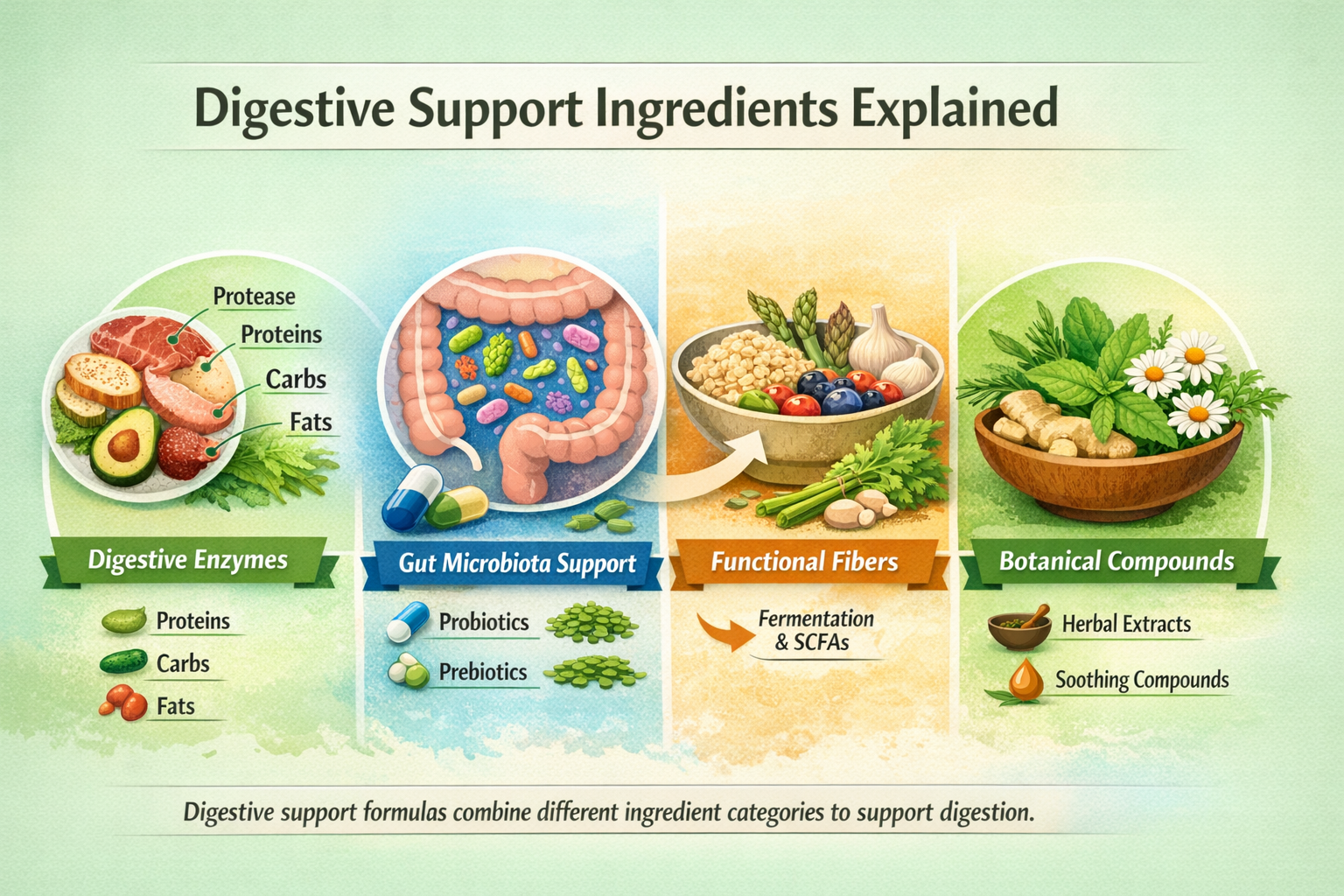
Digestive support supplements are often evaluated based on their ingredient lists, yet understanding why specific ingredients are included is more important than simply knowing their names. Each component in a digestive support formula is selected to support a particular aspect of the digestive process, and its relevance depends on how it fits within overall digestive physiology.
Digestion is not driven by a single mechanism. It involves enzymatic activity, gut motility, microbial balance, and nutrient absorption working together in a coordinated way. For this reason, digestive support formulas are typically designed using ingredient categories, rather than relying on isolated compounds.
Digestive enzymes, microbial-supporting ingredients, functional fibers, and botanical compounds each play different roles. When combined responsibly, these ingredients are intended to complement natural digestive function during meals that place higher demands on digestion. They are not designed to override normal physiology or to act as treatments for digestive conditions.
Understanding ingredient roles also helps prevent unrealistic expectations. Ingredients used in digestive support supplements are selected to support normal digestive processes, not to diagnose, treat, or cure gastrointestinal disorders. Their effectiveness depends on formulation balance, timing, individual digestive needs, and broader dietary and lifestyle factors.
This article breaks down the main categories of ingredients commonly found in digestive support formulas and explains how each category functions within digestion. By understanding ingredient purpose rather than marketing language, readers can make more informed decisions about whether digestive support supplementation aligns with their needs. To better understand how these ingredients interact within the digestive system, readers may explore how digestive support formulas work within the body.

For a complete overview of how these ingredient categories fit into a broader digestive support strategy, readers may also explore the Integrative Digestive Formula review, which examines digestion, formulation design, usage considerations, and safety in greater depth.
Digestive Enzymes: What They Are and Why They’re Used
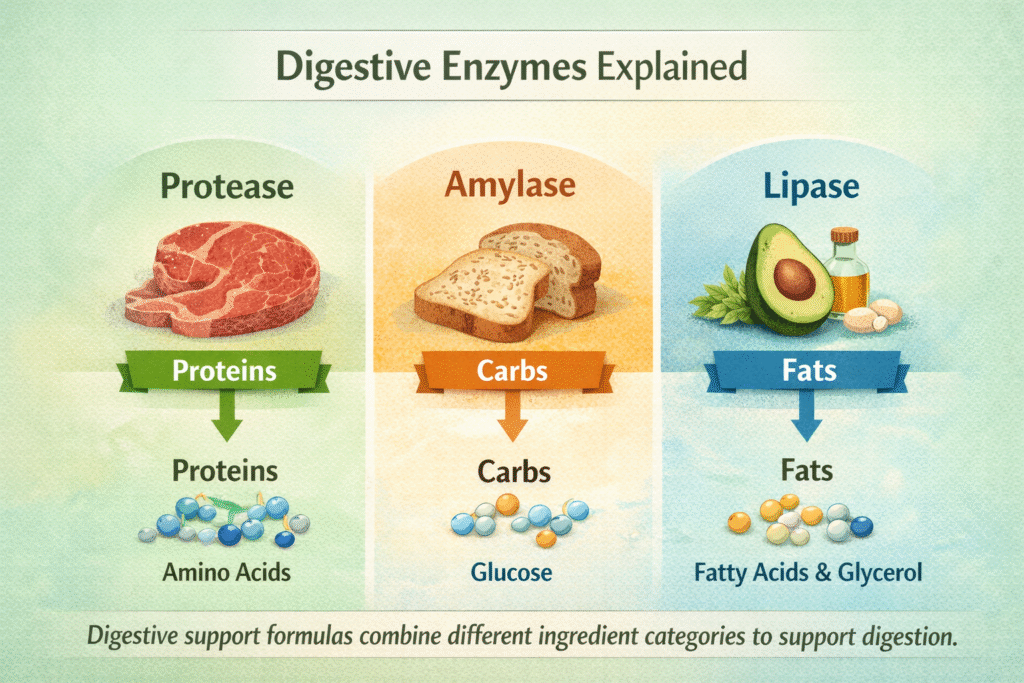
Digestive enzymes are among the most common ingredients found in digestive support formulas. Their inclusion is based on their role in facilitating the breakdown of food into smaller components that the body can absorb and use. These enzymatic functions help explain the digestive support benefits these formulas are designed to support.
The human body naturally produces digestive enzymes through organs such as the salivary glands, stomach, pancreas, and small intestine. These enzymes are released in response to food intake and are tailored to the macronutrient composition of a meal. Under typical conditions, endogenous enzyme production is sufficient to support digestion effectively.
However, digestive demand is not constant. Larger meals, higher protein intake, mixed macronutrient meals, or dietary transitions can temporarily increase the workload placed on the digestive system. In these situations, digestive support formulas may include enzymes to complement natural enzyme activity during digestion.
Different enzyme types serve different functions. Proteolytic enzymes assist in breaking proteins into amino acids and smaller peptides. Carbohydrate-digesting enzymes, such as amylase and related carbohydrases, support the breakdown of complex carbohydrates into simple sugars. Lipase enzymes help break down dietary fats into absorbable fatty acids and glycerol.
Digestive enzymes included in supplements are not intended to replace the body’s own enzyme production. Their role is supportive and situational, designed to assist digestion when digestive demand is temporarily elevated. Responsible formulations aim to support balanced macronutrient digestion without overstimulating digestive processes.
It is also important to recognize that more enzymes do not necessarily lead to better digestion. Excessive or unnecessary enzyme use may offer little benefit for individuals who already experience comfortable digestion. Understanding when and why enzymes are used helps ensure they are applied appropriately within a broader digestive support strategy.
Microbial Support Ingredients and Functional Fibers
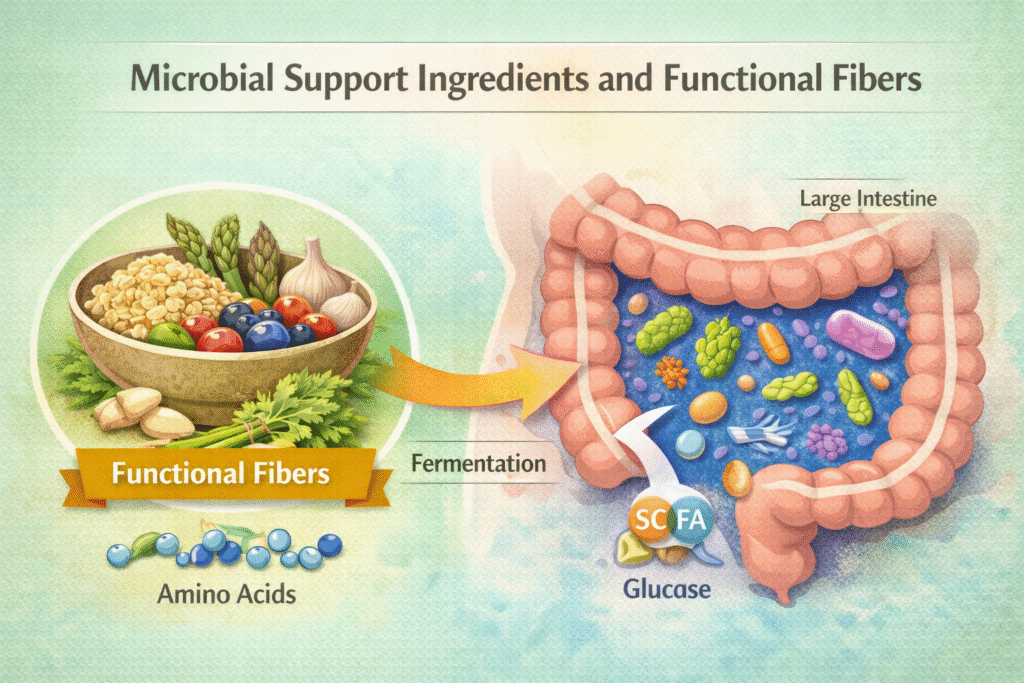
In addition to digestive enzymes, many digestive support formulas include ingredients designed to support the gut microbial environment. These ingredients are selected to complement digestion by influencing fermentation processes, intestinal balance, and digestive tolerance rather than directly affecting macronutrient breakdown.
The gut microbiota consists of trillions of microorganisms residing primarily in the large intestine. These microorganisms play a role in the fermentation of certain dietary fibers, the production of short-chain fatty acids, and overall digestive balance. Because of this, digestive support formulas may include ingredients intended to help maintain a favorable digestive environment.
Probiotic and Fermentation-Derived Ingredients
Some formulas include probiotic strains or fermentation-derived compounds. These ingredients are not intended to “fix” the microbiome or introduce dramatic changes. Instead, they are selected to support microbial balance, particularly during periods of dietary change or increased digestive demand.
Individual responses to probiotic ingredients can vary widely. Factors such as baseline microbiota composition, diet, and digestive sensitivity influence how these ingredients are tolerated.
Prebiotic and Functional Fibers
Prebiotic fibers differ from probiotics in that they are not living organisms. Instead, they serve as substrates that beneficial gut bacteria can ferment. During fermentation, these fibers contribute to metabolic byproducts that support intestinal function and digestive balance.
In digestive support formulas, functional fibers are typically included in moderate amounts. Excessive fiber intake may increase bloating or discomfort in sensitive individuals, which is why responsible formulation emphasizes balance rather than quantity.
Why Microbial Support Is Secondary to Enzymes
While microbial-supporting ingredients play a valuable role, they generally function as supportive components, not primary drivers of digestion. Enzymatic breakdown occurs earlier in the digestive process, whereas microbial fermentation takes place later, primarily in the large intestine.
Understanding this distinction helps clarify why digestive support formulas often combine enzymes with microbial-supporting ingredients rather than relying on one category alone.
Botanical and Functional Compounds in Digestive Support
Beyond enzymes and microbial-supporting ingredients, some digestive support formulas include botanical extracts and functional compounds selected for their role in digestive tolerance and comfort. These ingredients are typically included to complement digestion rather than directly participate in macronutrient breakdown.
Botanical compounds have a long history of traditional use related to digestion, particularly in supporting the body’s response to meals. In modern digestive support formulas, these ingredients are generally standardized and included in controlled amounts to ensure consistency and tolerability.
Functional Role of Botanical Ingredients
Botanical extracts used in digestive support formulas are often selected for their ability to:
- Support digestive comfort during and after meals
- Complement gut motility without stimulation
- Contribute to overall digestive tolerance
Importantly, these ingredients are not included as treatments for digestive disorders. Their role is supportive and adjunctive, fitting within a broader formulation strategy.
Digestive Comfort vs. Digestive Action
It is useful to distinguish between ingredients that actively participate in digestion (such as enzymes) and those that support the digestive experience. Botanical and functional compounds generally fall into the latter category.
They do not break down food or alter nutrient absorption directly. Instead, they may help support how the digestive system responds to food intake, particularly during meals that are larger, richer, or more complex.
Importance of Formulation Balance
As with other ingredient categories, balance is essential. Including too many botanical compounds or using excessive amounts may increase the likelihood of digestive sensitivity in some individuals. Responsible digestive support formulas prioritize moderation and synergy, ensuring that botanical ingredients complement enzymes and microbial-supporting components rather than compete with them.
Understanding the role of botanical and functional compounds helps clarify why digestive support formulas often include a combination of ingredient categories. Each group serves a different purpose, contributing to a more integrative and balanced approach to digestive support.
Ingredient Balance, Limitations, and Final Considerations
Digestive support formulas are most effective when their ingredients are balanced and used within appropriate contexts. No single ingredient category—enzymes, microbial-supporting components, fibers, or botanicals—works in isolation. Their value lies in how they are combined to complement different stages of digestion.
Understanding ingredient balance also helps clarify limitations. Digestive support supplements are not designed to correct underlying digestive disorders, nor can they compensate for chronically poor dietary habits or lifestyle factors that negatively affect digestion. Persistent digestive symptoms should always be evaluated by a qualified healthcare professional. Because individual tolerance to digestive support ingredients can vary, readers may also review digestive support side effects and safety considerations.
Individual responses to digestive support ingredients can vary. Some people may notice subtle changes in digestive comfort during certain meals, while others may experience little or no noticeable effect. These differences reflect variability in baseline digestion, diet composition, microbiota, and individual sensitivity.
For this reason, digestive support ingredients are best viewed as situational tools, selected to support digestion when demand is temporarily increased. How digestive support ingredients are typically used in daily routines, including timing with meals, is explained in the Digestive Support Dosage & How to Use article. Periodically reassessing whether supplementation remains appropriate helps ensure responsible use and realistic expectations.
For a comprehensive overview of how ingredient categories fit within a complete digestive support framework—including usage considerations and safety—readers may also explore the Integrative Digestive Formula review, which examines digestion, formulation design, and digestive support strategies in greater depth.
Frequently Asked Questions (FAQ)
Why do digestive support formulas include multiple ingredient categories?
Because digestion involves multiple processes, combining enzymes, microbial-supporting ingredients, fibers, and botanicals helps support digestion in a more balanced and integrative way.
Are more ingredients always better in digestive support supplements?
No. More ingredients do not necessarily lead to better digestion. Responsible formulations prioritize balance, appropriate dosing, and synergy rather than quantity.
Can digestive support ingredients improve digestion for everyone?
Not necessarily. Individual responses vary based on digestive health, diet, lifestyle, and sensitivity. Some individuals may not require digestive support at all.
Do digestive support ingredients treat digestive conditions?
No. Digestive support ingredients are not intended to diagnose, treat, cure, or prevent digestive diseases.
Should digestive support ingredients be taken continuously?
Digestive support supplements are often used situationally, particularly with meals that place higher demands on digestion, rather than as continuous daily supplements.
Medical Disclaimer
This content is for educational purposes only and is not intended to diagnose, treat, cure, or prevent any disease. Dietary supplements are not a substitute for professional medical advice. Always consult a qualified healthcare professional before starting any dietary supplement, especially if you have a medical condition or are taking medications.