
Digestive Support Side Effects: Safety Considerations Explained
Understanding Digestive Support Safety in Context
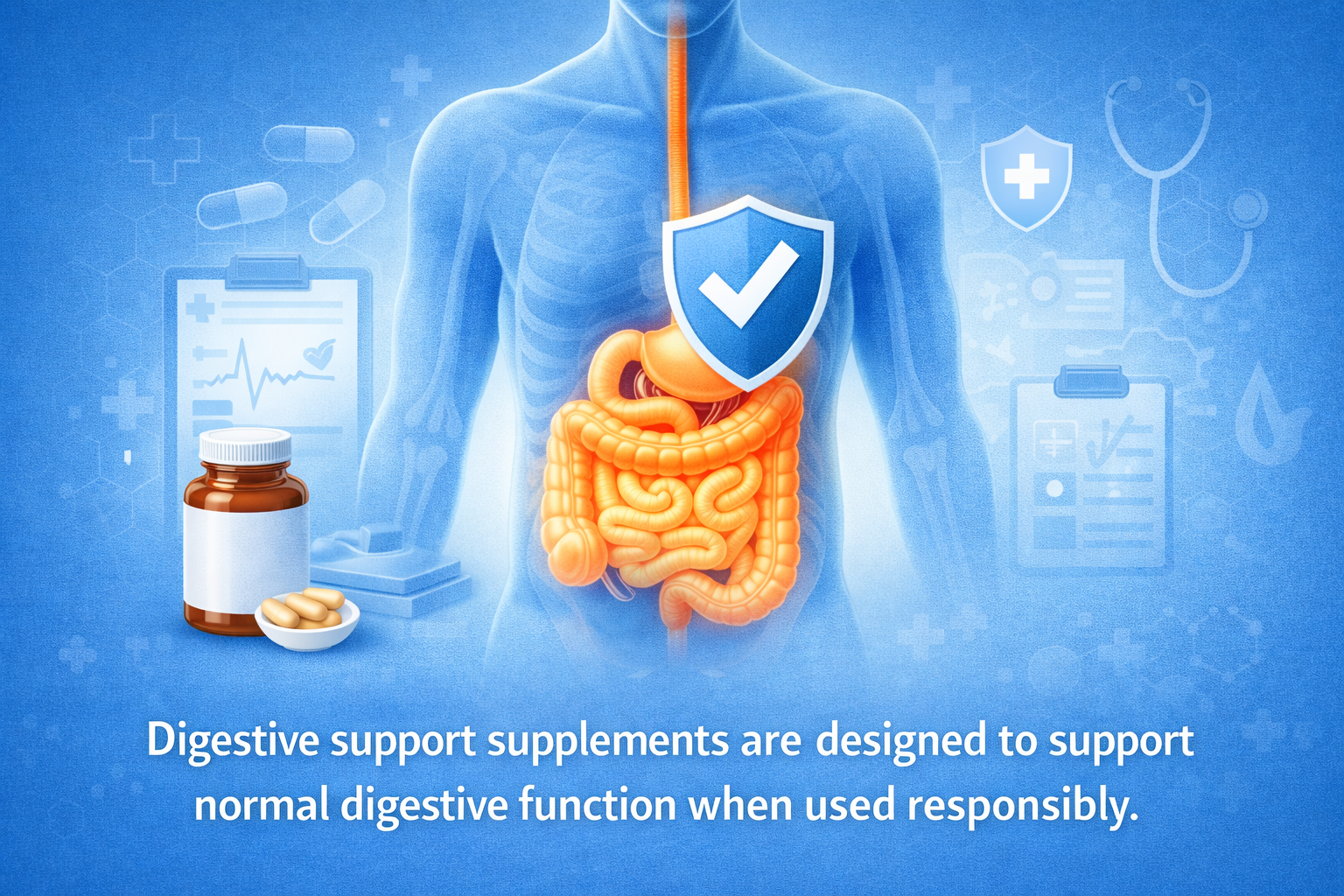
Digestive support supplements are generally formulated to work alongside normal digestive processes, providing nutritional components that support digestion rather than altering bodily function. Even so, understanding potential side effects and safety considerations is an essential part of responsible supplement use.
Side effects associated with digestive support formulas are typically mild, temporary, and related to individual sensitivity, rather than indications of harm. These responses often reflect how the digestive system adapts to new ingredients, changes in enzyme activity, or shifts in gut environment.
It is important to distinguish between normal digestive adjustment and reactions that may indicate intolerance or the need for professional guidance. This article focuses on helping readers understand that difference in a clear, balanced way.
Why Digestive Support Supplements Are Generally Well Tolerated
Most digestive support formulas are composed of ingredients commonly found in foods or naturally present in the digestive system, such as enzymes, fiber-related compounds, or microbiome-supporting components.
Because these ingredients are designed to complement existing digestive activity rather than override it, digestive support supplements are typically well tolerated when used according to label instructions. Many individuals experience no noticeable side effects at all, especially when supplements are introduced gradually and used as directed.
That said, individual responses vary, and tolerance depends on factors such as ingredient composition, dosage, meal timing, and overall digestive sensitivity.
Common Digestive Responses and Why They May Occur
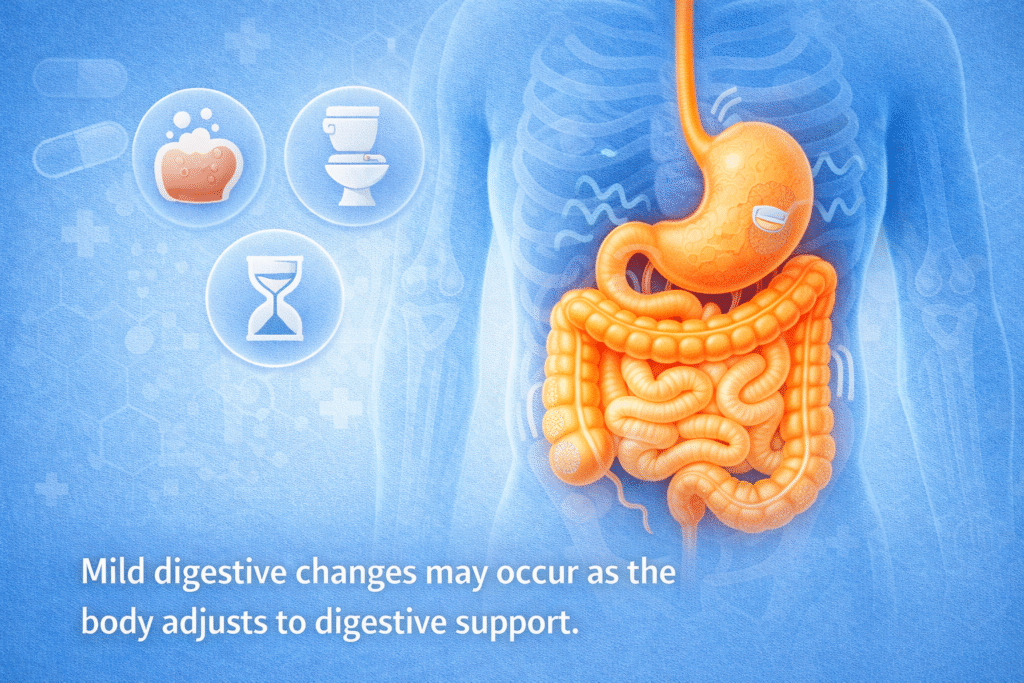
When beginning a digestive support supplement, some individuals may notice mild and temporary digestive changes. These responses are often part of the body’s natural adjustment process rather than indicators of a negative reaction.
To understand how usage patterns may influence digestive comfort, readers may explore how digestive support dosage and timing are commonly approached.
Commonly reported digestive responses may include:
- Mild bloating or fullness
- Temporary changes in bowel regularity
- Sensations related to increased digestive activity
These effects are generally short-lived and may lessen as the digestive system adapts to new ingredients or changes in digestive support routines.
How Dosage and Timing Can Influence Tolerance
Digestive responses are often influenced by how and when a supplement is taken. Starting with a lower serving size and using digestive support in connection with meals may help reduce the likelihood of discomfort.
Larger or more frequent servings than recommended do not increase benefits and may increase the chance of digestive sensitivity. Responsible use prioritizes alignment with label instructions and individual tolerance.
Individuals Who May Be More Sensitive to Digestive Support
While digestive support supplements are generally well tolerated, certain individuals may experience greater sensitivity depending on their digestive profile, health status, or ingredient response.
Understanding these factors helps readers make more informed and cautious decisions about supplementation.
Sensitivity to Specific Digestive Support Ingredients
Some individuals may be more sensitive to particular components commonly found in digestive support formulas, such as digestive enzymes, fiber-related compounds, or microbiome-supporting ingredients.
For example, changes in enzyme activity may initially feel unfamiliar to individuals who are new to digestive support, while certain microbiome-related ingredients may temporarily influence digestive patterns as the gut environment adjusts.
These responses are typically mild and temporary, but they highlight the importance of starting gradually and monitoring individual tolerance.
Existing Digestive Conditions or Ongoing Symptoms
Individuals with diagnosed digestive conditions or persistent digestive symptoms should approach digestive support supplementation with additional caution.
Digestive support supplements are not intended to treat digestive disorders, and ongoing symptoms may require evaluation by a healthcare professional. In these cases, professional guidance can help determine whether digestive support is appropriate and how it should be used safely.
Medication Use and Special Populations
Those taking prescription medications, as well as pregnant or nursing individuals, should consult a qualified healthcare professional before using digestive support supplements.
Physiological changes during pregnancy, nursing, or medical treatment may influence digestive function and nutrient needs, making individualized guidance especially important.
When to Adjust Use or Discontinue Digestive Support
Responsible use of digestive support supplements includes recognizing when adjustments may be necessary and when discontinuation is appropriate. While mild and temporary digestive changes can occur during initial use, persistent or worsening symptoms should not be ignored.
Digestive support supplements are not intended to push the body past discomfort. Instead, they should integrate smoothly into normal digestive function. Paying attention to how the body responds is a key part of safe supplementation.
Signs That May Indicate the Need to Adjust Use
Some individuals may benefit from adjusting dosage, timing, or frequency if they experience ongoing discomfort. Signs that adjustment may be appropriate include:
- Digestive discomfort that persists beyond an initial adjustment period
- Increased bloating, cramping, or irregular bowel patterns
- Sensations of digestive strain rather than support
In many cases, reducing intake or taking digestive support strictly with meals may help restore comfort.
When Discontinuation and Professional Guidance Are Recommended

Discontinuing digestive support and seeking professional guidance is recommended if digestive symptoms continue despite dosage adjustments or if new symptoms develop.
A qualified healthcare professional can help determine whether symptoms are related to supplementation or whether further evaluation is necessary. Digestive support supplements should never replace medical assessment when symptoms are persistent or concerning. Guidance on determining whether digestive support supplementation is appropriate based on individual needs is discussed in the Who Should Use Digestive Support Supplements article.
Making Informed and Safe Decisions About Digestive Support
Understanding potential side effects and safety considerations helps place digestive support supplementation in its proper context. These formulas are designed to support normal digestive function, not to override bodily signals or replace medical evaluation.
Responsible use involves following label instructions, respecting individual tolerance, and recognizing when professional guidance may be appropriate. Digestive support supplements should always be viewed as supportive tools within a broader digestive health strategy, rather than standalone solutions.
Readers seeking a complete overview of digestive support — including how benefits, dosage, and safety considerations work together — may explore the main Digestive Support pillar article.
When used thoughtfully, digestive support formulas can be incorporated into a long-term wellness approach that prioritizes balance, awareness, and digestive comfort.
Frequently Asked Questions
Are digestive support supplements safe for most adults?
Digestive support supplements are generally well tolerated when used as directed. Individual responses vary, and sensitivity may depend on ingredients, dosage, and overall health.
Can digestive support supplements cause side effects?
Some individuals may experience mild and temporary digestive changes, particularly when starting use. Persistent or worsening symptoms should be evaluated by a healthcare professional.
Should I stop using digestive support if discomfort occurs?
Reducing dosage or adjusting timing may help in some cases. If symptoms persist or intensify, discontinuing use and seeking professional guidance is recommended.
Who should consult a healthcare professional before use?
Individuals with medical conditions, those taking medications, and pregnant or nursing individuals should consult a qualified healthcare professional before using digestive support supplements.
Medical Disclaimer
The information provided in this article is for educational purposes only and is not intended as medical advice. Digestive support supplements are not intended to diagnose, treat, cure, or prevent any disease. Always consult a qualified healthcare professional before starting any dietary supplement, especially if you have a medical condition, are taking medications, or are pregnant or nursing.