How Advanced Collagen Plus Works Within the Body
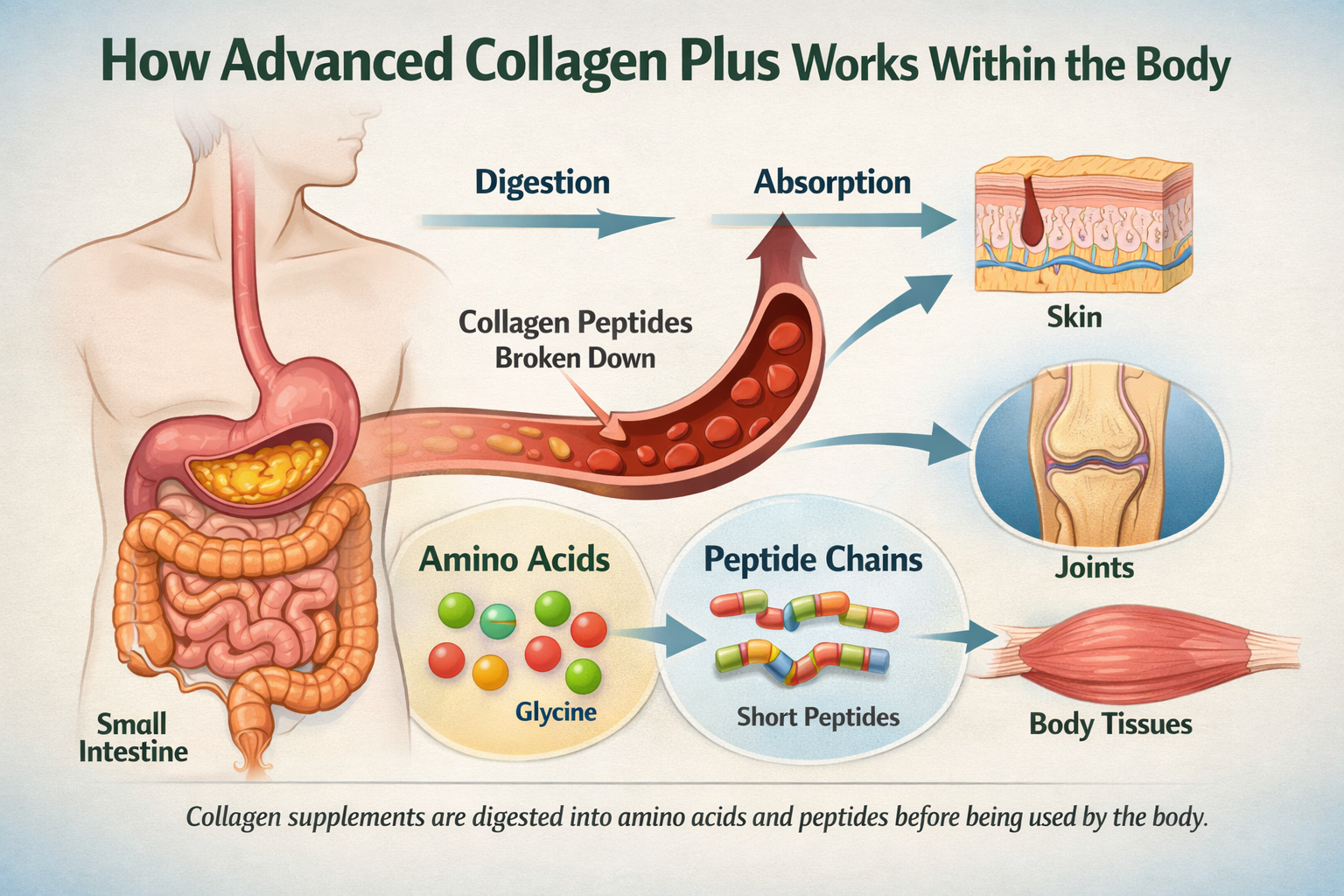
Understanding how collagen supplementation works begins with understanding how the body processes dietary proteins. Collagen, like all proteins, is not absorbed in its whole form. Instead, it undergoes digestion and breakdown before its components are made available for use throughout the body.
Advanced Collagen Plus is designed as a collagen powder supplement that provides collagen peptides and supportive nutrients. Its role is to supply the body with building blocks that may support normal collagen-related processes, rather than delivering collagen directly to specific tissues.
This article explains how Advanced Collagen Plus works from a biological and nutritional perspective, focusing on digestion, absorption, utilization, and the factors that influence individual response.
Understanding Collagen Digestion and Absorption
To understand how Advanced Collagen Plus works within the body, it is essential to first look at how collagen is digested and absorbed. Collagen supplements do not bypass digestion or act directly on skin or joints. Instead, they follow the same fundamental pathways as other dietary proteins.
This biological process explains why collagen supplementation is considered supportive and gradual rather than immediate or targeted.
What Happens to Collagen After Ingestion
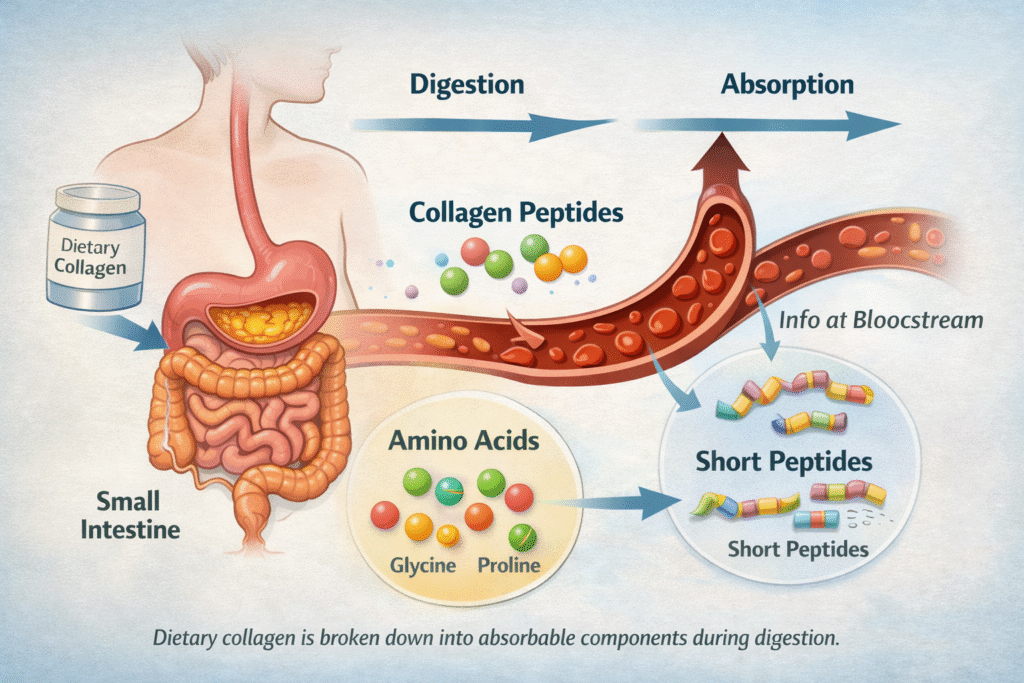
Once consumed, collagen powder enters the digestive system, where it is exposed to stomach acid and digestive enzymes. These processes break collagen peptides into smaller units, including individual amino acids and short peptide chains.
These smaller components are then absorbed through the intestinal lining and released into the bloodstream, where they become part of the body’s general amino acid pool.
Why Collagen Is Not Absorbed as Whole Collagen
A common misconception is that ingested collagen travels intact to the skin or joints. In reality, the digestive system breaks all dietary proteins down into absorbable components.
Because of this, collagen supplementation does not guarantee delivery to a specific tissue. Instead, it contributes nutrients that the body may use where needed, based on overall physiological priorities.
Absorption Efficiency and Individual Differences
The efficiency with which collagen-derived amino acids are absorbed can vary between individuals. Factors such as digestive health, enzyme activity, gut function, and overall protein intake influence how effectively the body processes collagen supplements.
These differences help explain why individual responses to collagen supplementation may vary and why consistent use over time is typically emphasized.
How Collagen Peptides Are Utilized by the Body
After digestion and absorption, collagen-derived amino acids and peptides enter the bloodstream and become available for use throughout the body. At this stage, their role is no longer limited to collagen alone but to general protein metabolism.
Understanding how the body utilizes these components helps clarify what collagen supplementation can realistically support.
Contribution to the Body’s Amino Acid Pool
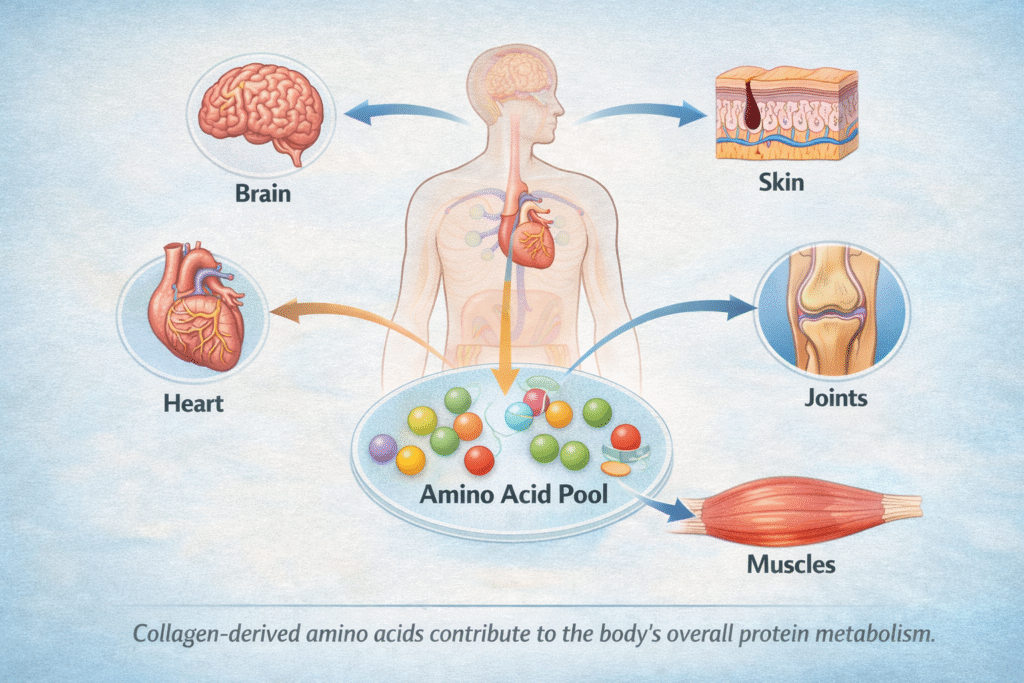
Once absorbed, amino acids from collagen peptides contribute to the body’s overall amino acid pool. This pool supplies raw materials for a wide range of biological processes, including tissue maintenance, enzyme production, and structural protein synthesis.
The body prioritizes the use of amino acids based on immediate physiological needs, which may or may not involve collagen synthesis at a given time.
Collagen Synthesis as a Regulated Process
Collagen production within the body is a regulated process that depends on multiple factors, not solely on the availability of collagen-derived amino acids. Adequate intake of supporting nutrients, overall protein balance, hormonal signals, and metabolic health all influence collagen synthesis.
Because of this regulation, collagen supplementation supports availability of building blocks but does not directly trigger or accelerate collagen production beyond normal physiological limits.
Why Effects Are Gradual Rather Than Immediate
Structural proteins like collagen are continuously remodeled over time. Changes related to collagen availability tend to occur slowly as tissues undergo natural turnover and maintenance.
Associated with long-term structural support rather than rapid or noticeable short-term effects.
The Role of Complementary Nutrients in Advanced Collagen Plus
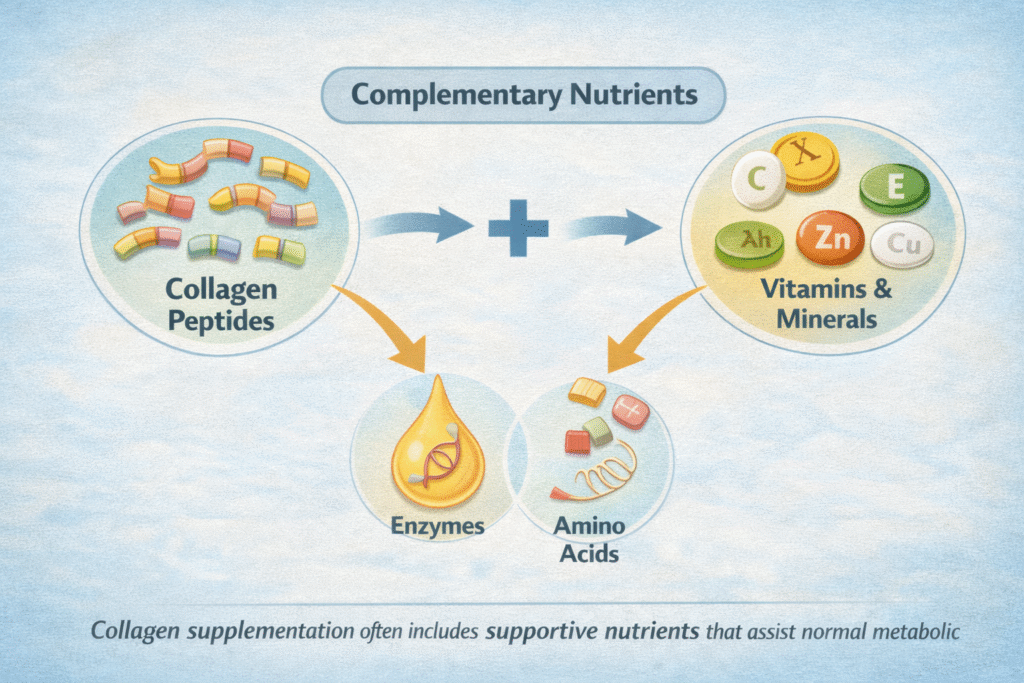
While collagen peptides provide amino acids, collagen-related processes in the body also rely on additional nutrients that support normal protein metabolism and connective tissue maintenance. For this reason, collagen formulas often include complementary nutrients alongside collagen itself.
Advanced Collagen Plus is designed with this supportive approach in mind, aiming to provide nutrients that work within established biological pathways.
Supporting Normal Collagen-Related Processes
Certain nutrients are commonly included in collagen supplements because they participate in enzymatic reactions involved in collagen formation and tissue maintenance. These nutrients do not create collagen on their own but help support the body’s ability to utilize available amino acids effectively.
Their inclusion reflects an emphasis on nutritional completeness rather than reliance on collagen alone.
Complementary Nutrients as Support, Not Shortcuts
It is important to understand that complementary nutrients do not override the body’s regulatory systems. They support normal physiological function but do not force collagen synthesis or produce targeted outcomes.
This reinforces the role of Advanced Collagen Plus as nutritional support rather than a product designed to deliver immediate or localized effects.
Why Formulation Matters
The combination of collagen peptides with supportive nutrients reflects how collagen-related processes naturally occur in the body — through interaction of multiple nutrients and metabolic pathways.
A balanced formulation helps ensure that collagen supplementation aligns with normal biological function rather than attempting to isolate or exaggerate the role of a single ingredient.
Factors That Influence Individual Response to Collagen Supplementation
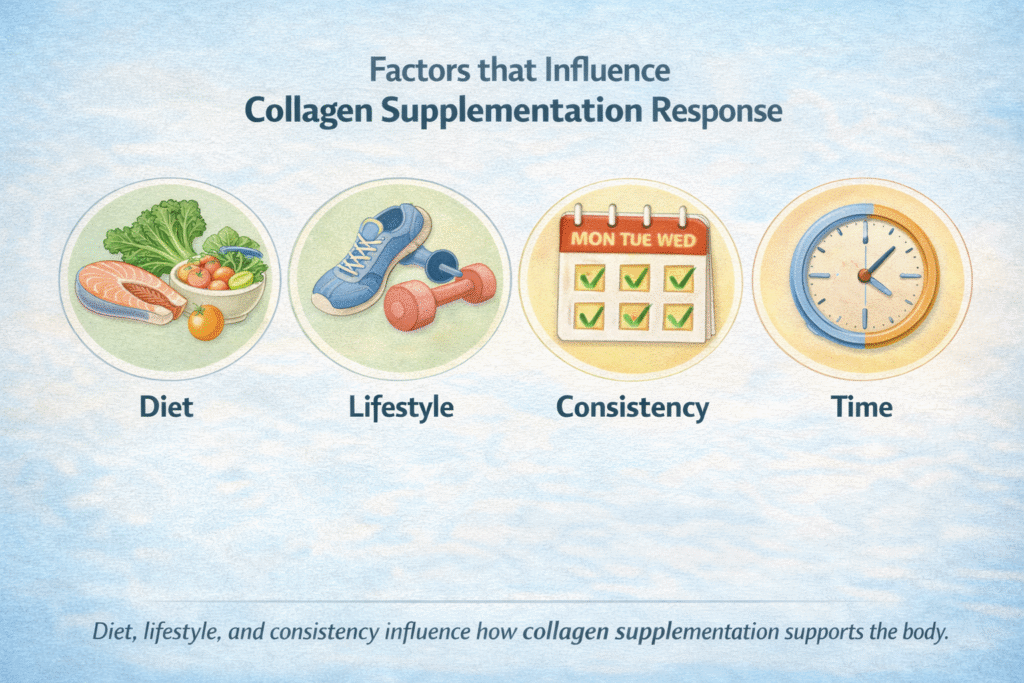
Responses to collagen supplementation can vary significantly between individuals. While Advanced Collagen Plus is designed to support normal collagen-related processes, outcomes depend on a combination of biological, nutritional, and lifestyle factors.
Understanding these variables helps set realistic expectations and reinforces why collagen support is typically framed as a long-term strategy.
Overall Diet and Protein Intake
Collagen supplementation works within the context of total dietary protein intake. Individuals who consume adequate protein from a variety of sources may experience collagen supplementation as a complementary addition rather than a primary protein source.
Conversely, poor overall nutrition may limit the body’s ability to utilize collagen-derived amino acids effectively.
Lifestyle Factors and Physical Activity
Physical activity places mechanical demands on connective tissues, which may influence how the body prioritizes tissue maintenance and repair. Hydration, sleep quality, and recovery habits also play important roles in supporting normal tissue function.
Collagen supplementation does not replace these lifestyle factors but may complement them when used consistently.
Consistency and Time
Because collagen-related changes occur gradually, consistent use over time is often emphasized in collagen supplementation discussions. Irregular or short-term use is less likely to align with the slow turnover of structural tissues.
Patience and realistic expectations are therefore essential when considering collagen support.
How This Article Fits Within the Advanced Collagen Plus Content Cluster
This article focuses specifically on explaining how Advanced Collagen Plus works within the body from a biological and nutritional perspective. Its goal is to help readers understand digestion, absorption, utilization, and the factors that influence how collagen supplementation supports normal physiological processes.
Rather than evaluating outcomes or suitability, this guide establishes foundational knowledge that supports informed interpretation of collagen supplementation.
Relationship to the Pillar Article
While the pillar article provides a comprehensive overview of Advanced Collagen Plus, this satellite explores one specific aspect in greater depth: how the supplement functions after ingestion.
Readers seeking broader context may also explore:
- What Advanced Collagen Plus is designed to support
- Ingredient composition and formulation rationale
- Who may consider collagen supplementation
- Safety considerations and responsible use
Together, these resources form a cohesive educational framework.
Supporting Informed and Responsible Decisions
By understanding how collagen supplementation works biologically, readers are better equipped to evaluate claims, manage expectations, and determine whether collagen support aligns with their personal wellness goals.
This knowledge-first approach reflects a responsible content strategy focused on transparency, accuracy, and long-term trust.
Frequently Asked Questions About How Advanced Collagen Plus Works
Does Advanced Collagen Plus deliver collagen directly to the skin or joints?
No. Like all dietary proteins, collagen from Advanced Collagen Plus is digested and broken down into amino acids and small peptides before absorption. The body then distributes these nutrients based on physiological needs, rather than sending collagen directly to specific tissues.
Why doesn’t collagen supplementation work immediately?
Collagen is a structural protein that is continuously remodeled over time. Because tissue turnover is gradual, collagen supplementation is generally associated with long-term support rather than immediate or noticeable short-term effects.
Are collagen peptides used only for collagen production?
Not necessarily. Once absorbed, collagen-derived amino acids contribute to the body’s overall amino acid pool and may be used for various protein-related processes, depending on the body’s priorities at that time.
Do complementary nutrients change how collagen works?
Complementary nutrients may support normal metabolic and enzymatic processes involved in collagen-related functions, but they do not override the body’s regulatory systems or force collagen production beyond normal physiological limits.
Medical Disclaimer
This content is provided for informational purposes only and does not constitute medical advice. Dietary supplements are not intended to diagnose, treat, cure, or prevent any disease. Individual responses to supplementation may vary. Always consult a qualified healthcare professional before starting any supplement, especially if you have a medical condition, are pregnant or nursing, or are taking medications.